
November 2026
Shift 2026: The Transition to Sustainable Infrastructure

Space Group’s annual climate conference, Shift, returned to Newcastle upon Tyne on the 4th of November for its fifth year running, bringing together almost 200 delegates from across the built environment and beyond for a day of thoughtful, climate-focused discussion.
As part of Space Group, colleagues from BIM Technologies joined representatives from across the country to explore the challenges and opportunities involved in accelerating decarbonisation. With attendees travelling up from London, including individuals from London-based sustainability firms. The event highlighted a shared ambition to drive decarbonisation up the public agenda.
Now in its fifth year, Shift has continued to grow as an opportunity for architects, manufacturers, digital specialists, local authorities and sustainability professionals to exchange ideas and consider how different sectors can contribute to a more sustainable future. This year's discussions placed particular emphasis on looking beyond established ways of working, the importance of early collaboration and making more informed decisions throughout the project lifecycle.
Opening the conference, Rob Charlton, CEO of Space Group and co-founder of BIM Technologies, reflected on the changes the industry has experienced over the past five years. His address highlighted the need to challenge conventional thinking, embrace new approaches to turn ambition into meaningful progress.
The morning keynote was delivered by Dr Piers Taylor, renowned architect and thought leader in experimental architecture. His presentation, 'Beyond the Low-Carbon Building', explored the relationship between efficiency and sufficiency, encouraging us to reconsider not only how buildings are designed and constructed, but whether building is always the right solution in the first place. He also examined the environmental consequences of material choices, embodied carbon and the importance of understanding the natural resources and landscapes behind the products we use.
For those working across construction and manufacturing, Taylor's presentation reinforced the need to consider the wider impact of design-stage decisions. His emphasis on understanding material origins, exploring lower-carbon alternatives and developing the skills needed to work with them offered an important reminder that sustainability must be considered throughout the entire building process.
Alongside this, the morning session brought valuable regional perspectives from Katie Ridley, Head of Sustainability at Barbour, and Ross Lowrie, Head of Clean Energy & Environment at the North East Mayoral Strategic Authority. Lowrie outlined the region's decarbonisation ambitions, highlighting plans for warmer, renewably powered homes, 25,000 new green jobs, investment in offshore wind, and continued development of retrofitting and renewable energy infrastructure. His discussion accentuated the importance of renewable energy and the wider transition to more sustainable infrastructure.
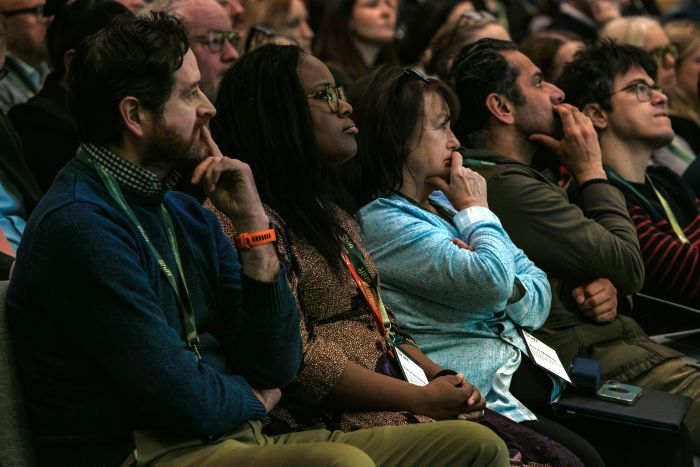
The afternoon continued these conversations through the theme of 'Looking Again', turning attention to the potential of existing buildings, adaptive reuse and the importance of bringing the right expertise together at the earliest stages of a project.
Discussions with speakers including Phil Lloyd and Catherine Dewar highlighted how effective collaboration, well-managed information, and early-stage decision-making can help teams identify opportunities, avoid unnecessary work, and achieve better outcomes.
These ideas directly connect to the work of BIM Technologies. By supporting effective information management and collaboration between project teams, the business helps clients, architects and contractors establish clearer processes from the outset. Bringing the right people and information together early allows potential challenges to be identified sooner, decisions to be made with greater confidence and project requirements to be considered in a more joined-up way.
Another important topic running through this year's discussions was the growing role of AI. While its potential to improve efficiency, support decision-making and accelerate progress across the built environment is becoming increasingly apparent, questions remain around its environmental cost and how it can be used responsibly. Rather than reaching a definitive conclusion, conversations at Shift acknowledged the need to better understand both the opportunities and the consequences of emerging technologies.
BIM Technologies is a business focused on developing digital tools that improve efficiency and compliance across projects, innovation is an important part of its work. However, as part of a certified B Corporation, the company also recognises its responsibility to consider the wider impact of the technologies it adopts and develops. AI and other emerging tools should be approached with a clear understanding of where they can add genuine value, supporting more sustainable ways of working without being detrimental to the planet.
Many of the discussions at Shift returned to the notion that meaningful progress can only be achieved through better collaboration, and more informed decision at early design stages. Whether we consider the materials we specify, the energy infrastructure we invest in, the buildings we choose to retain, or the technologies we introduce, the choices made at the beginning of a project can have lasting consequences.
For BIM Technologies, the conference provided a valuable opportunity to reconnect with clients, partners and colleagues, while hearing perspectives from across the wider industry. It also reinforced the importance of working collaboratively across Space Group's businesses, to ensure that climate is always at the forefront of design decisions. Events like Shift remain an important part of the wider effort to accelerate change across the built environment. For us, it demonstrated how effective information management and responsible digital innovation will remain central to helping the industry make more sustainable decisions.
Watch the full Shift 2026 Livestream here.